
Heating, Ventilation, and Air Conditioning (HVAC)
Program Description and Objective
Length: 36 weeks (9 Months)
Quarter Credit hours: 40.5
Modality: Hybrid
Language: Bilingual
Day and Evening Classes Available
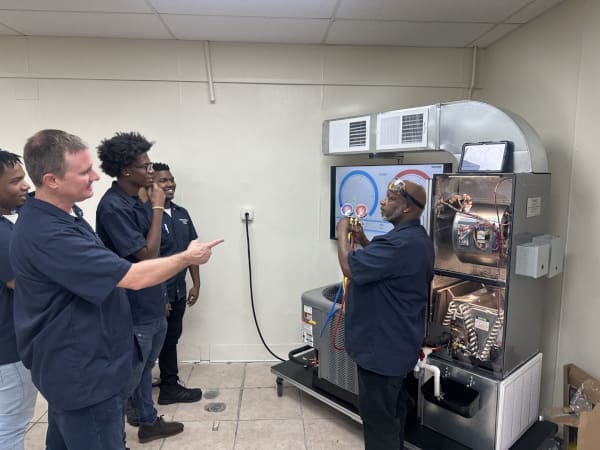
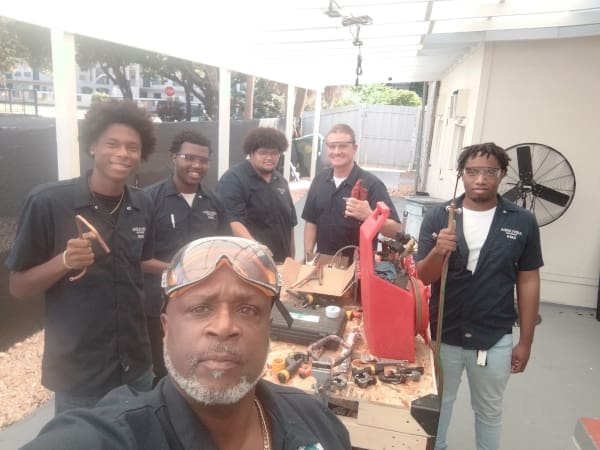
In this program, you will focus on the knowledge and skills you will need to pursue a career in the heating, ventilation, and air conditioning field. This could include selling, installing, or maintaining residential equipment. The curriculum includes hands-on lab simulations that will help prepare you for field work that is typically performed by shop service and repair technicians and apprentice mechanics. The program is designed to provide students with instructions and hands-on training in areas such as installation, maintenance, repair, troubleshooting, and basic design of refrigeration, heating, and air conditioning systems, along with a focus on service operations. The HVAC program includes preparation for EPA Section 608 Certification for Stationary Air Conditioning and Refrigeration.
The objective of this program is to prepare students for entry-level positions, such as heating, ventilation, air conditioning, refrigeration, and shop service technicians.
Take the Next Step
Heating, Ventilation, and Air Conditioning (HVAC) Learning Objectives:
- Recognize and identify essential electrical components such as resistors, capacitors, and switches used in HVAC systems.
- Demonstrate safe handling and proper use of HVAC hand tools and power tools in various scenarios.
- Recognize the applications of refrigeration in food preservation and other industries and explain the scientific principles behind these applications.
- Develop practical skills in diagnosing and troubleshooting motor-related issues in HVAC equipment.
- Apply industry best practices for installing and maintaining residential air conditioning systems for optimal performance.
- Develop skills in troubleshooting and diagnosing issues within various heating systems.
- Apply specific operational procedures for effectively troubleshooting heat pumps to diagnose and repair malfunctions.
- Describe the function and operation of commercial chill water condenser systems, including low-pressure and high-pressure systems.
Admissions Requirements
All students must be 18 years of age; otherwise, a parent or legal guardian must consent and register with the student’s approval.
Enrolling students must provide proof of a high school diploma (from a foreign school if it is equivalent to a U.S. high school diploma) or a GED. Acceptable proof of graduation can also be an associate’s, bachelor’s, or master’s degree. A copy of the diploma or transcript showing graduation date must be on the document provided. A foreign school’s diploma will need to be translated and authenticated.
All homeschooled students must show proof of his or her homeschooling self-certification that is recognized by the pertinent state.
Heating, Ventilation, and Air Conditioning (HVAC) Outline and Course Description:
Fundamentals of electricity provides students with a familiarity with the basic understanding of electrical principles that are the foundation for the future courses while introducing them to components and equipment needed for troubleshooting.
Tools and equipment is a course designed to introduce students to the tools and equipment of the HVAC industry and familiarize them with proper use of each tool for safe and proper handling. These tools will become a vital part of the student’s everyday life as they transition into the HVAC industry.
Basic Refrigeration covers the function of a simple refrigeration cycle and how and why it works the way it does to cool food and other items for preservation. Students are introduced to the application and theory of refrigeration principles and how to use that understanding to service and repair systems.
Electrical motors and control — this course is designed to develop familiarity of motors and the components that control them. Electrical motors play a vital role in making sure that the processes of refrigeration follow a practical sequence of operation.
Air conditioning installation introduces students to installation principles and how to professionally install ducting to be at the most efficient for the system. This class introduces students to the diverse types of fasteners used in the HVAC industry to make sure that there are not leaks that could cause problems.
This course is designed to introduce students to the principles of residential air conditioning systems. The content includes lecture and classroom hands-on learning on residential servicing of residential equipment. The lab’s focus is the evaluation of equipment and diagnosing problems.
Heating systems has been created as a class that will engage students in the process of troubleshooting heating systems. The students get a chance to watch the sequence of operation of a live unit and identify each component and how it contributes to the heating system.
Heat-pumps are designed to develop an understanding of heat pumps and how they operate in heating and cooling cycles. Students learn how to identify components and troubleshoot equipment malfunctions. Heat-pumps are unique systems and require specific operational procedures for troubleshooting. This class introduces students to these procedures.
Commercial refrigeration introduces students to commercial chill water condenser systems and includes low pressure and high-pressure chilled water systems, cooling towers. These systems are common in larger applications and very efficient for air conditioning apartments and larger buildings.
Graduation Requirements
Candidate for Graduation has met the requirements as follows:
- Passed all required courses in the student’s program, and
- Earned an overall cumulative 2.0 (“C” average) or better on a 4.0 scale, and
- Meet the attendance requirements; and
- Completed the program within the time frame as defined by Satisfactory Academic Progress (SAP).
Heating, Ventilation, and Air Conditioning (HVAC) Diploma will be awarded upon completion of this program.
HVAC Program Frequently Asked Questions
The program takes about 36 weeks (9 months) to complete.
You’ll learn how to install, maintain, and repair heating, ventilation, and air conditioning systems. The program also covers safety, troubleshooting, and working with modern tools and equipment.
No prior HVAC experience is required. A high school diploma or equivalent is recommended.
Graduates can apply for entry-level jobs such as HVAC installer, service technician, or maintenance technician in residential, commercial, or industrial settings.
It’s a mix of both. You’ll get classroom instruction plus plenty of hands-on training in labs that use real equipment.
Yes. The school offers career services, including resume help, interview prep, and connections with local employers.
HVAC technicians are in high demand. According to the Bureau of Labor Statistics, job growth in this field is expected to remain strong.
Yes. Financial aid is available for those who qualify, and the school can discuss payment plan options.
Merryfield Academy offers flexible scheduling options. Ask the admissions team about current class times.
Merryfield combines experienced instructors, hands-on training, and career support, all in Fort Lauderdale, helping students prepare for real jobs in the HVAC industry.
Ready to Start Your HVAC Career?
Take the first step toward building hands-on skills for a career in heating, ventilation, air conditioning, and refrigeration. Explore Merryfield Academy’s HVAC program and see how training can help prepare you for the field.
