
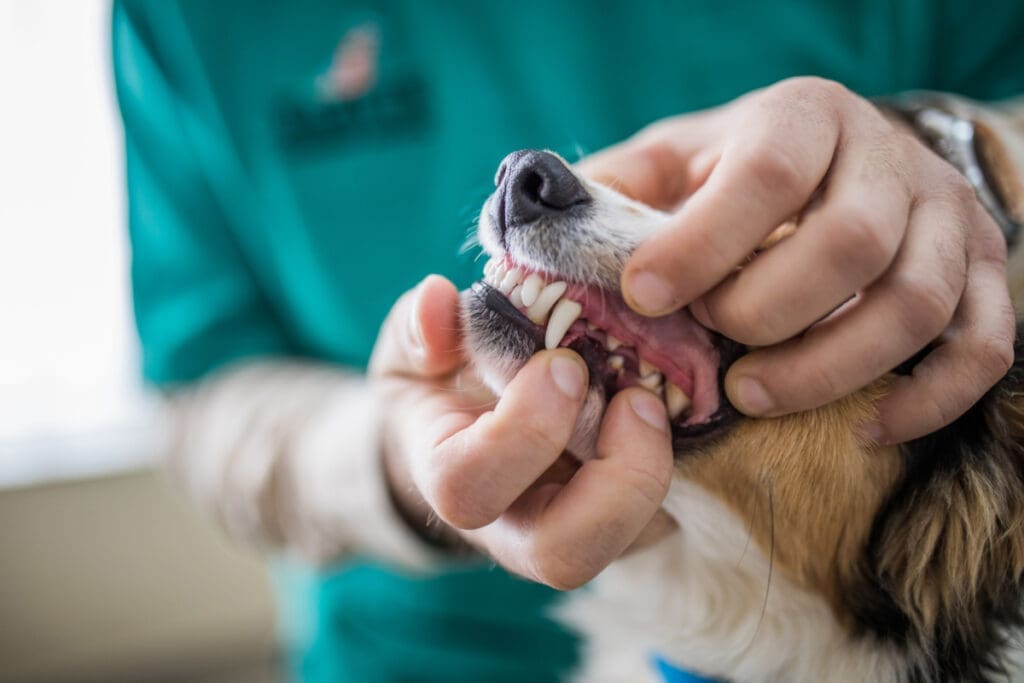
When a pet comes in for a grooming appointment, most owners expect you to handle the bath, haircut, nails, and maybe a little de-shedding. What they may not realize is that groomers are often the first people to notice early signs of dental problems. Because you work so closely around a pet’s face, mouth, and overall behavior, you have a great opportunity to catch issues before they turn into major health problems.
Why Dental Health Matters for Pets
Dental disease is one of the most common health problems in dogs and cats. When left untreated, it can lead to pain, infection, tooth loss, and even issues affecting the heart and kidneys. Groomers are not responsible for diagnosing dental disease, but noticing the early warning signs can help owners take action and get their pets the care they need.
Dental Warning Signs to Look For
Understanding what to look for can help groomers provide better care, build trust with pet parents, and support a pet’s long-term health. Here are the common dental warning signs you can spot during a regular grooming session.
1. Bad Breath That Doesn’t Smell “Normal”
All pets have some degree of “dog breath” or “cat breath,” but strong or sour-smelling odors are often the first sign of dental trouble.
What to look for:
- A strong, unpleasant smell when the pet pants
- A sour or rotten odor around the mouth
- Breath that seems much worse than their last visit
This can be an early indicator of plaque buildup, gum disease, or infection.
2. Red, Swollen, or Bleeding Gums
While brushing or trimming around the face, take a quick look at the gums. Healthy gums should be pink and smooth.
Possible warning signs include:
- Bright red or inflamed gum lines
- Bleeding when the gums are touched
- Dark red spots or sores
These may point to gingivitis, which is the early stage of periodontal disease.
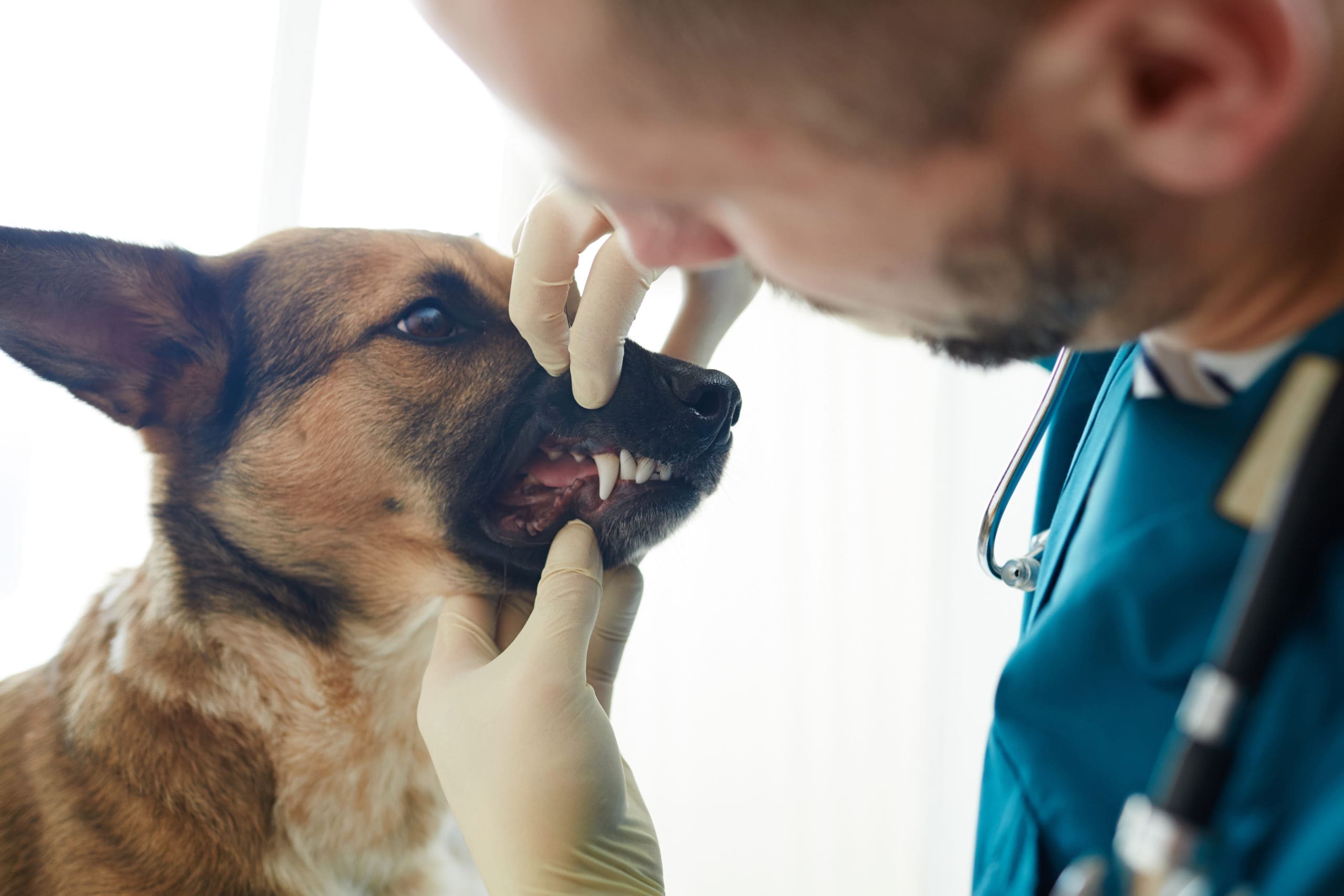
3. Excessive Drooling
Some drooling is normal, depending on the breed, but a sudden increase can signal discomfort.
What it may indicate:
- Oral pain
- Tooth infection
- Gum inflammation
- Something stuck in the teeth
If the drool is thick, ropey, or smells bad, it’s worth mentioning to the owner.
4. Trouble Chewing or Mouth Sensitivity
During the appointment, you may notice a pet acting differently when you touch the muzzle, chin, or cheeks.
Watch for:
- Pulling away when you touch their face
- Flinching near the mouth
- Difficulty eating treats
- Pawing at the mouth
These behaviors can point to dental pain or a damaged tooth.
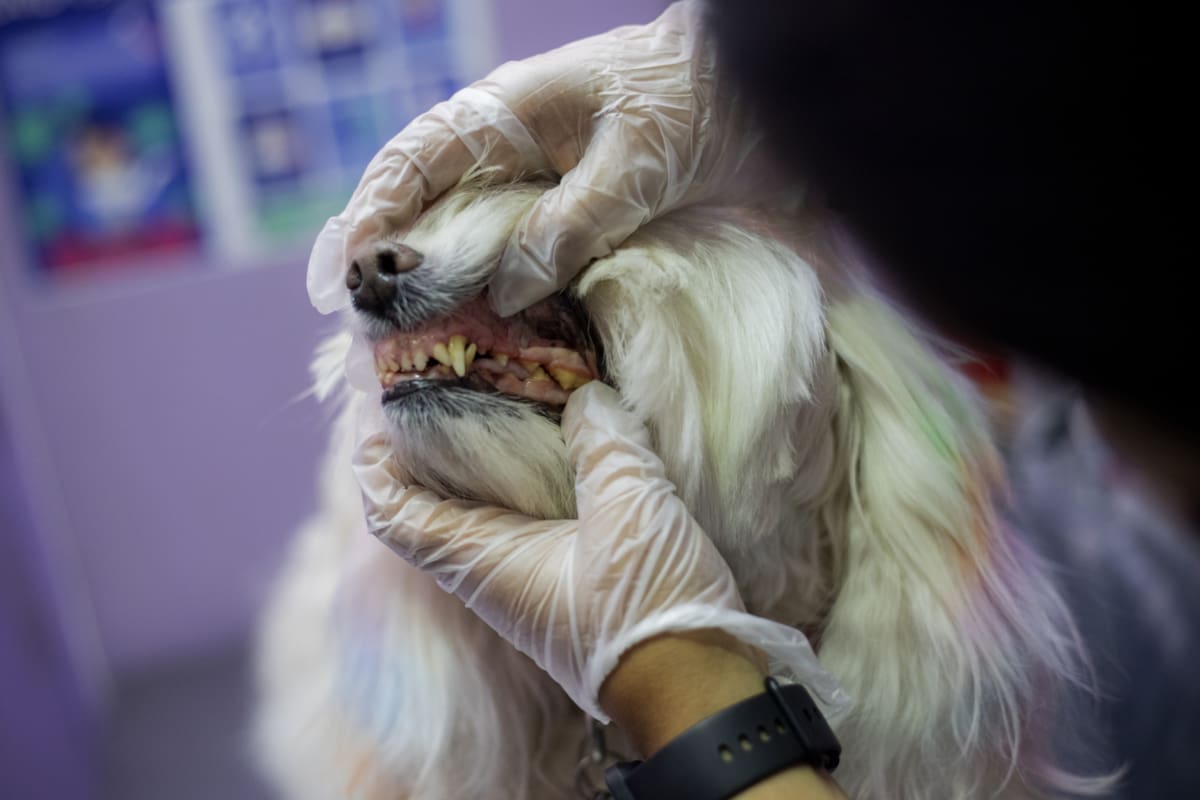
5. Yellow, Brown, or Built-Up Tartar
While grooming around the mouth, take note of the teeth themselves.
Signs of concern include:
- Yellow or brown buildup on the tooth surface
- Thick tartar near the gum line
- Teeth that look cracked, broken, or loose
These can indicate long-term buildup or more serious dental disease.
6. Teeth That Look Damaged or Loose
Groomers often notice chipped or loose teeth while cleaning around the muzzle.
Possible problems include:
- Fractured teeth
- Dead or discolored teeth
- Loose teeth that move when the pet pants
- Missing teeth the owner didn’t mention
Any of these should be brought to the owner’s attention, as they may require veterinary care.
7. Swelling Around the Mouth or Under the Eyes
Facial swelling can be subtle, but groomers tend to notice changes in a pet’s appearance because they see them regularly.
Common causes include:
- Abscessed teeth
- Oral infections
- Gum disease that has progressed
Swelling under the eyes often points to an upper-tooth infection.
8. Excessive Pawing at the Face
A dog or cat who keeps scratching or rubbing at their mouth may be trying to relieve pain.
You might notice this:
- While drying the face
- On the grooming table
- When the pet is waiting for pickup
This behavior is worth mentioning to the owner, especially if it’s new.
How Groomers Can Communicate Dental Concerns to Owners
You’re not diagnosing. You’re simply observing. A friendly, professional heads-up can help owners take the next step toward proper dental care.
Good ways to communicate include:
- I noticed some redness along the gums today. You may want to keep an eye on it.
- There’s a bit of tartar buildup that seems new since the last visit.
- I’m seeing signs of discomfort when I touch the muzzle. A vet check might help rule out any dental problems.
Most owners appreciate the extra attention and the chance to catch problems early.
The Role of Professional Groomers in Dental Health
At Merryfield Academy, we train our future groomers to look at the whole pet, not just the coat. Learning how to recognize early signs of dental issues helps groomers provide better customer service and support overall pet wellness.
Whether you’re brushing out a coat, trimming a face, or handling a nervous dog, you may be the first person to notice something a pet can’t tell their owner about. That makes your role incredibly valuable.
