
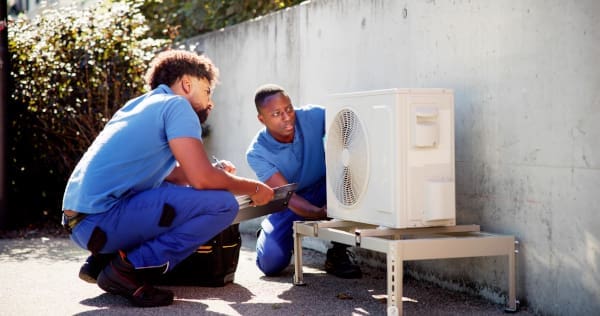
If you enjoy working with your hands, solving problems, and learning how mechanical systems work, a career in heating, ventilation, and air conditioning (HVAC) may be worth exploring. HVAC professionals help install, maintain, troubleshoot, and repair the systems that keep homes and businesses comfortable.
Completing an HVAC training program can help prepare you to pursue several types of entry-level positions. Depending on the employer and work environment, graduates may find opportunities in residential, commercial, or industrial settings.
So, what jobs can you get with HVAC training? Here are some of the career paths you may be able to pursue after completing an HVAC program.
HVAC Installer
HVAC installers help install new heating and cooling equipment in homes, businesses, and other buildings. This can include air conditioners, furnaces, heat pumps, ductwork, and related components.
Installers need to understand how different HVAC components work together and how to safely use the tools and equipment required for installation. They may also need to read diagrams, take measurements, connect electrical components, and test newly installed systems.
Because installation often takes place at different job sites, this career can be a good fit for people who prefer hands-on work and don’t want to spend every day behind a desk.
HVAC Service Technician
Service technicians focus on diagnosing and addressing problems with heating and cooling systems.
When a system isn’t working correctly, an HVAC service technician may inspect the equipment, identify the source of the problem, and determine what repairs or adjustments are needed. Their work can involve checking electrical components, testing motors and controls, examining refrigerant systems, and replacing worn or damaged parts.
Service technicians also interact with customers regularly. Being able to explain a problem and the recommended solution clearly can be just as important as having strong technical skills.
HVAC Maintenance Technician
Not every HVAC service call involves a broken air conditioner or heating system. Preventive maintenance is another important part of keeping HVAC equipment operating properly.
HVAC maintenance technicians inspect and service systems to identify potential problems and help equipment operate efficiently. Common responsibilities can include cleaning components, changing filters, checking electrical connections, inspecting equipment for wear, and testing system performance.
Maintenance technicians may work for HVAC contractors or organizations that maintain their own buildings and equipment.
Where Can You Work With HVAC Training?
HVAC professionals work in a variety of environments, and the type of equipment they encounter can vary depending on the setting.
Residential HVAC
Residential HVAC professionals work primarily with heating and cooling systems found in homes, apartments, and other residential properties.
A typical day could involve installing a new air conditioning system, performing routine maintenance, or troubleshooting a system that has stopped cooling properly. Residential technicians often travel between customers throughout the day, making every service call a little different.
Customer service is particularly important in residential HVAC because technicians frequently work directly with homeowners.
Commercial HVAC
HVAC professionals can also work in commercial environments such as offices, stores, schools, restaurants, and other facilities.
Commercial heating and cooling systems may be larger or more complex than residential equipment. Technicians working in these environments may install, inspect, maintain, or repair equipment used to control temperatures throughout larger buildings.
As technicians gain experience and additional skills, commercial HVAC can provide another direction for career development.
Other HVAC Work Environments
HVAC professionals may find opportunities with heating and air conditioning contractors, property management companies, construction companies, schools, hospitals, hotels, apartment communities, retail facilities, and other organizations that rely on climate-control systems.
According to the U.S. Bureau of Labor Statistics, heating, air conditioning, and refrigeration mechanics and installers work on heating, ventilation, cooling, and refrigeration systems. Employment in this occupation is projected to grow faster than the average for all occupations.
What Skills Do You Need for an Entry-Level HVAC Career?
Employers may have different requirements depending on the position, but HVAC professionals generally need a combination of technical knowledge, problem-solving abilities, and hands-on skills.
HVAC training can introduce students to areas such as:
- Electrical fundamentals
- HVAC tools and equipment
- Refrigeration principles
- Electrical motors and controls
- Air conditioning installation
- Residential air conditioning systems
- Heating systems
- Troubleshooting and maintenance
- Workplace safety
Learning these fundamentals can help students develop a foundation they can continue building upon as they pursue entry-level opportunities and gain experience in the field.
How Can HVAC Training Help You Prepare?
HVAC systems combine electrical, mechanical, heating, cooling, and refrigeration components. Formal training gives students an opportunity to learn how these systems operate while developing practical skills in a structured environment.
At Merryfield Academy, the Heating, Ventilation, and Air Conditioning (HVAC) program combines instruction with hands-on lab simulations designed to prepare students for field work. Students receive training in installation, maintenance, repair, troubleshooting, refrigeration, heating, and air conditioning systems.
The program also includes preparation for the EPA Section 608 Certification for stationary air conditioning and refrigeration.
Start Preparing for an HVAC Career
HVAC training can help prepare students to pursue several entry-level career paths, including HVAC installer, service technician, and maintenance technician positions. From residential homes to commercial facilities, trained HVAC professionals can work in a variety of environments while continuing to develop their skills and experience.
If you’re interested in a hands-on career that combines technical knowledge with problem-solving, HVAC training could be your next step.
Merryfield Academy’s HVAC Technician Training Program is designed to help students develop the knowledge and practical skills needed to pursue entry-level opportunities in the HVAC industry.
Learn more about Merryfield Academy’s HVAC program, upcoming start dates, tuition, financial aid options for those who qualify, and how to get started.
